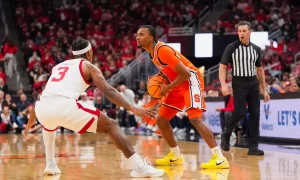

Crunch time. The final few possessions that decide whether Syracuse walks away with a win or regret. It’s the part of the game that reveals a team’s nerve, planning, and ability to manage risk under pressure. For fans who also explore online betting, there’s more to learn from those late-game moments than just the final score.
Whether it’s an ill-advised three with a defender in your face or a clever inbound play that buys the perfect look, decision-making in those final moments mirrors the instincts and processes that separate smart betting from emotional gambling. Success in either scenario hinges on boldness, timing, structure, and understanding what’s truly at stake.
Smooth Interfaces and Smart Choices
Just as a team benefits from a cohesive system and reliable execution, bettors rely on intuitive and stable platforms. A clunky interface can stall quick decisions or cause errors. A smooth, responsive platform streamlines the process, leaving more focus for actual strategy.
That’s where the right digital environment plays a huge role. A quality sports betting and casino platform like JackpotCity Casino offers a streamlined interface with a responsive design, helping users manage risk while staying in control. The key here is how platforms can either support or sabotage user decisions through their design and experience.
Whether navigating a live sportsbook or playing on a digital table, users need tools that allow for fast, informed responses. Just like a point guard assessing defensive switches, the quality of that digital court shapes the options available.
Shot Selection and Bet Size Require Context
In Syracuse basketball, late-game possessions are about who takes the shot AND why that shot makes sense in the moment. A heat-check three with 14 seconds left might look confident, but if the offense hadn’t settled, it could waste a chance. The same applies when someone throws down a bet during a live game. Without context, that decision becomes guesswork.
Understanding odds, reading flow, and assessing value in real-time takes more than instinct. Just like an offense shouldn’t default to isolation without working the clock or drawing mismatches, smart bettors don’t chase every “hot pick.” They wait for the right opening.
Risk tolerance plays into this. In basketball, it’s about trusting whether a possession can stretch for a better look. In betting, it’s about not blowing your budget chasing something flashy. It’s not about avoiding risk, but knowing which risks are worth the shot.
Timeouts, Reviews, Second Looks & The Value of Slowing Down
Every coach knows the power of a timeout at the right moment. Not to break rhythm, but to stop a slide or reset expectations. For bettors, the digital equivalent lies in stepping back and re-evaluating mid-session.
One common mistake in both worlds is letting momentum blind judgment. When a team forces a turnover and rushes a shot instead of setting up their offense, that adrenaline can override logic. The same happens after a win streak online – suddenly, bets get larger and riskier without recalibration.
In both settings, the ability to stop, re-assess, and re-focus is often what separates smart from impulsive. Some platforms even allow cool-off periods or controlled betting windows that mimic that sideline timeout. Leveraging these tools, like a coach uses a clipboard, becomes part of managing the bigger picture.
Reading the Opponent, Not Just the Odds
Late in a game, reading your opponent becomes critical. Is the defender tired? Are they switching too slowly on screens? Can a trap be baited? These clues help players decide whether to attack or pull back.
In betting, the same principle applies. But here, the “opponent” is often the market. Odds move. Information spreads. Public betting leans one way. Following every shift without reading the underlying moves is like reacting to every head fake. It might look active, but it rarely works out.
Some platforms offer trend data or betting heat maps. While useful, they’re just signals. The smarter play is looking deeper – what might shift the next odds move, and is there hidden value being overlooked? That’s what experienced bettors do. The approach resembles scouting tape more than following social media hype.
Emotion Can’t Run the Clock
One of the fastest ways to lose a tight game is letting emotion override execution. The same goes for betting. A missed shot in the final minute doesn’t justify jacking up the next one. A bad beat on a close parlay doesn’t call for doubling down in frustration.
Syracuse fans have seen both sides – moments where discipline led to stunning wins, and other times when panic rushed the final plays. Betting follows the same rhythm. Calm, methodical choices overrule emotionally charged responses every time.
Smart players and bettors prepare for different outcomes. Not because they fear failure, but because they plan for volatility. They don’t expect every shot to drop or every pick to hit. They build systems that allow for rebounds – on the court and in the bankroll.
Endgame Adjustments & Knowing When to Pivot
There’s a subtle difference between having a game plan and clinging to one. Coaches who thrive in crunch time know when to tweak sets, switch matchups, or even bench star players to create better combinations. The best betting strategies also evolve.
A bettor might begin with live football markets, only to realize their edge lies in tennis or blackjack probabilities. Stubbornly sticking to one playbook, just to prove a point, often does more damage than recalibrating early.
Adaptability is underrated in both arenas. Success isn’t about perfect execution from tipoff to buzzer. It’s about making the right adjustments based on how the game unfolds, whether that’s managing foul trouble or reacting to market shifts mid-bet.