

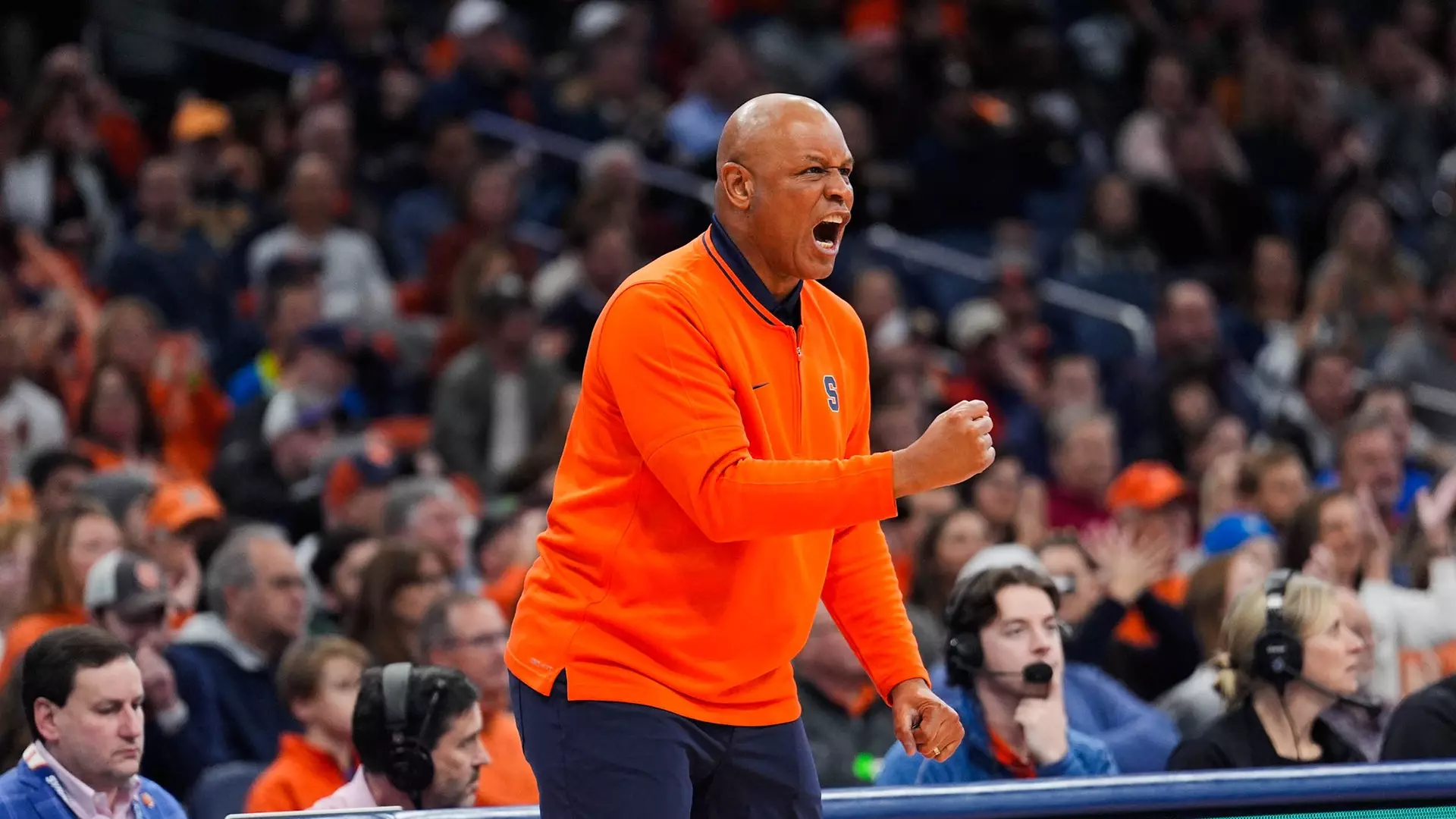
February is when college basketball teams quietly reveal what they are and what they still might become. For Syracuse, this year’s story has been uneven, but far from finished. The Orange have shown defensive bite, individual talent, and flashes of real momentum, only to give some of it back with frustrating losses.
With March approaching, the math gets tighter and the moments get louder. There’s less room to experiment and more pressure to execute. This stretch won’t decide everything, but it will decide how Syracuse enters March: as a team still shaping its future, or one chasing urgency night after night.
The Current Reality as the Stretch Begins
Syracuse enters the heart of ACC play at 4-6 positioned in the middle of the league, a place that reflects both promise and missed opportunity. With a NET ranking hovering in the mid 70s, the Orange remain close enough to the national conversation to matter, yet far enough away to feel the tension of this stretch.
Losses like the road setback at North Carolina and the loss to NC State have narrowed the path. Those results linger not because they define Syracuse, but because they limit flexibility later. The Orange have shown they can compete physically; consistency is now the challenge as the schedule stiffens.
The reality is that the ACC’s depth leaves little room for stagnation. With several conference peers jockeying for limited postseason space, Syracuse no longer benefits from waiting for opportunities; it must create them through consistent execution and timely results over the coming weeks.
Games That Will Shape Syracuse’s March Madness Outlook
February is the season within the season. Every game matters, but some carry extra weight, emotionally and nationally. This month will tell the clearest story about Syracuse’s ceiling.
Road Tests That Could Change the Narrative
Winning on the road in the ACC is never routine, but a single breakthrough can shift how a team is viewed.
At Virginia (Feb. 7): A test of patience, defense, and half-court discipline,
At Duke (Feb. 16): A stage where effort, not reputation, earns respect.
Stealing even one of these games wouldn’t erase earlier losses, but it would reshape the conversation.
Home Games Syracuse Must Protect
Home court still matters, especially in February.
- SMU (Feb. 14): A true swing game with bubble implications,
- North Carolina (Feb. 21): A chance to respond after the road meeting,
- California (Feb. 11): A must-win to avoid another résumé setback.
These are the nights that quietly separate teams still standing from those scrambling.
What Syracuse Has Shown and What Must Carry Forward
Syracuse’s defense has been its most reliable identity. When set in the half-court, the Orange defends the paint well and forces opponents into difficult shots. That trait travels, especially late in the season when possessions tighten, and margins shrink.
Offensively, the margin has been thinner than Syracuse would like. Turnovers and missed free throws have flipped close games, turning strong efforts into narrow losses. These are the kinds of details that linger because they are often the difference between control and regret.
February only magnifies those moments. As the postseason picture sharpens, teams are judged less on potential and more on results, a shift reflected across the evolving tournament landscape, including March Madness odds, which respond quickly to late-season performances.
The Players Who Will Define the Stretch Run
Every February run has faces attached to it. For Syracuse, Donnie Freeman’s return has steadied the lineup, adding athleticism and defensive versatility. His presence changes rotations and allows others to settle into more natural roles.
Beyond the top names, February often reveals who can be trusted in tight moments when games swing possession by possession. Defensive communication, rebounding effort, and decision-making under pressure frequently matter more than raw production as roles solidify.
JJ Starling remains central to Syracuse’s offense. When he plays controlled basketball, the offense flows; when possessions rush, problems follow. February is when trust tightens, minutes reflect reliability, and the players who thrive become the heartbeat of March.
Why Execution Matters More Now Than Ever
Early-season mistakes can be corrected over time. February mistakes linger. Close games in packed gyms hinge on a single possession, a defensive stop, or a trip to the line. Syracuse has already felt how small margins decide outcomes.
Across college basketball, rotations shorten, and expectations sharpen as teams adjust to postseason-style basketball with every possession carrying more weight. Pace slows, defensive efficiency rises in importance, and late-game execution increasingly decides outcomes.
For Syracuse, the challenge is simple to state and difficult to master. They need to do the little things well, as fatigue and pressure peak. This has long been part of the conversation, as reflected in the latest NCAAB insights and trends. The March environment is when disciplined teams separate themselves from the pack.
The Stretch That Will Define Syracuse’s Season
This isn’t about perfection. It is about progress at the right time. Syracuse still controls its story, even if the path has narrowed. February offers chances to rewrite perceptions, strengthen habits, and build confidence against real competition.
Some teams peak early and fade. Others grow into themselves just as the stakes rise. The Orange don’t need to win every game, but they do need to show who they are when the season asks its hardest questions.
How Syracuse answers over the next few weeks will define not just its March outlook, but how this season is remembered.