
In August 2002, a 16-year-old soccer player, Wayne Rooney, made his debut in the Premier League, which is the highest level of English soccer and, arguably, the world. Rooney wasn’t even the youngest debutant for his team, as that honor went to Joe Royle, who beat Rooney by a matter of weeks.
Rooney’s experience is rare enough in elite-level soccer, but certainly not unheard of: “If you’re good enough, you’re old enough,” is the mantra you hear from top soccer bosses when explaining why teenagers – children, technically – can play at the top level of the game. But what if, hypothetically, Rooney had swapped soccer for (American football) and been born on the other side of the Atlantic? He would have maybe two years left on his high school team, followed by a few years in college.
The US college system is quite alien to Europeans
Naturally, there are distinct differences between football and soccer, and there’s a reason why you don’t have 16-year-olds running around the NFL, though Rooney, if you are aware of him, would have been strong enough. Nonetheless, it highlights how unique the US high school and collegiate system is compared with the rest of the world. In fact, sports fans in Europe and beyond find it hard to get their heads around.
That does not mean that Europeans lack knowledge of US sports. The NFL and NBA has a big presence in Britain and on the content. Fans will watch the games on dedicated channels, bet on the Super Bowl, and may even participate in grassroots versions of basketball and football (especially the former). Moreover, there is some recognition of college football, including in Ireland, where the College Football Classic is held each August.
But generally speaking, it’s the mechanics of the system that remain uniquely American. College sports in Europe tend to be focused on amateur sports; if soccer or basketball, the games are not usually played by aspiring professionals, you will have already joined a team by college age or headed out to the US to join a college team. Some countries’ college sports systems are considerably weaker than others. The UK’s for instance, is very muted, with some niche events and disciplines, like rowing, reserved for top universities like Oxford and Cambridge.
Support for college sports is limited
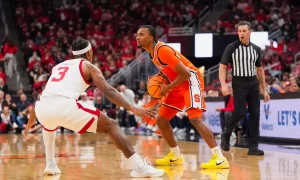
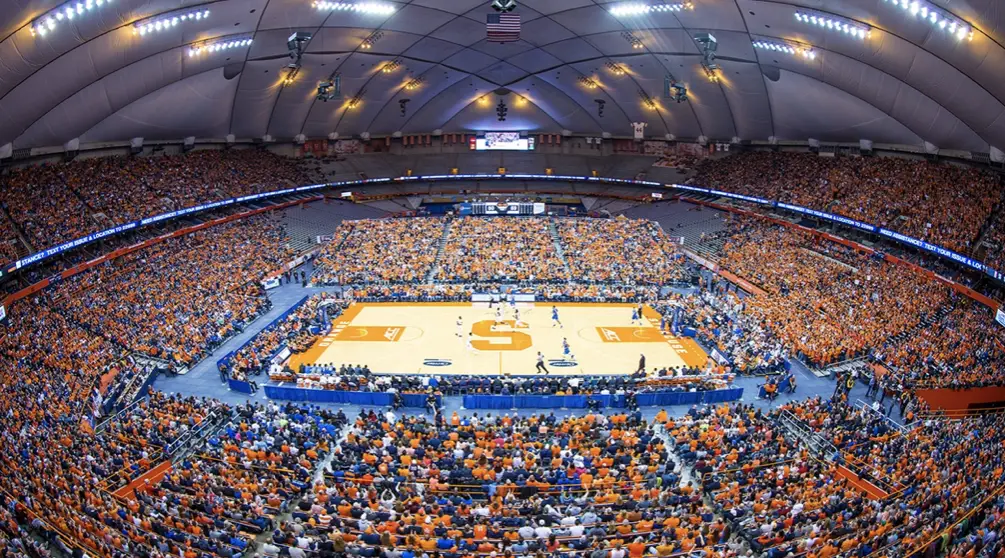
Away from the mechanics, the support given to college teams is another one that is difficult to fathom. Explain to someone that 80,000 fans can pack into a stadium for a college football game, and you’ll be greeted by raised eyebrows. Some of this feels like a logistical reason. For example, the tiered system of soccer leagues across Europe means that hometown teams – regardless of where you are – compete in one complete system, whereas pro US sports leagues are static, having no relegation and promotion, for instance.
In saying all this, there are countries with similar systems: Japan, for example. Canada, also. And we would also argue that the formidable pull of college sports, despite being technically an amateur sport (we know that amateur should be used loosely when describing college athletes), is mirrored in places like Ireland, where Gaelic sports still rule the roost. Ireland can pack 80,000 fans into Croke Park Stadium for Gaelic football and hurling matches easily, and we argue that its inter-county and club system is the closest to the US college sports ecosystem overall.
<iframe width=”560″ height=”315″ src=”https://www.youtube.com/embed/jxjNhVvf3xI?si=tktS8x37DgQ1jwvY” title=”YouTube video player” frameborder=”0″ allow=”accelerometer; autoplay; clipboard-write; encrypted-media; gyroscope; picture-in-picture; web-share” referrerpolicy=”strict-origin-when-cross-origin” allowfullscreen></iframe>
Yet, it still boils down to this salient fact: Nobody expects the best 19-year-old player for Manchester University FC to be playing in front of 75,000 fans on a Sunday afternoon. Said player would have already been snapped up by Manchester United or Manchester City, spending years in the club’s academies before being deemed to be good enough for the “first’ team.
And that perhaps is a good way to end things: Because while college sports stars get the benefit of an education while honing their craft, the European system does not offer the same. If young Rooney had suffered a career-ending injury – and it has happened to numerous youngsters – he would have been cast out of the professional system without the benefit of a third-level education. It’s an all-or-nothing system.