
For years, many Syracuse fans have had the same quiet suspicion.
Did the leaders at the university really understand how important big-time sports are to the school?
Under outgoing AD John Wildhack, there were frequent questions about whether the Orange were investing aggressively enough to keep pace with the top tier of the ACC. NIL infrastructure. Staff resources. Strategic urgency. The perception among fans was that Syracuse loved athletics culturally — but maybe didn’t fully treat them as a core business driver.
Now the new chancellor may have just changed that conversation.
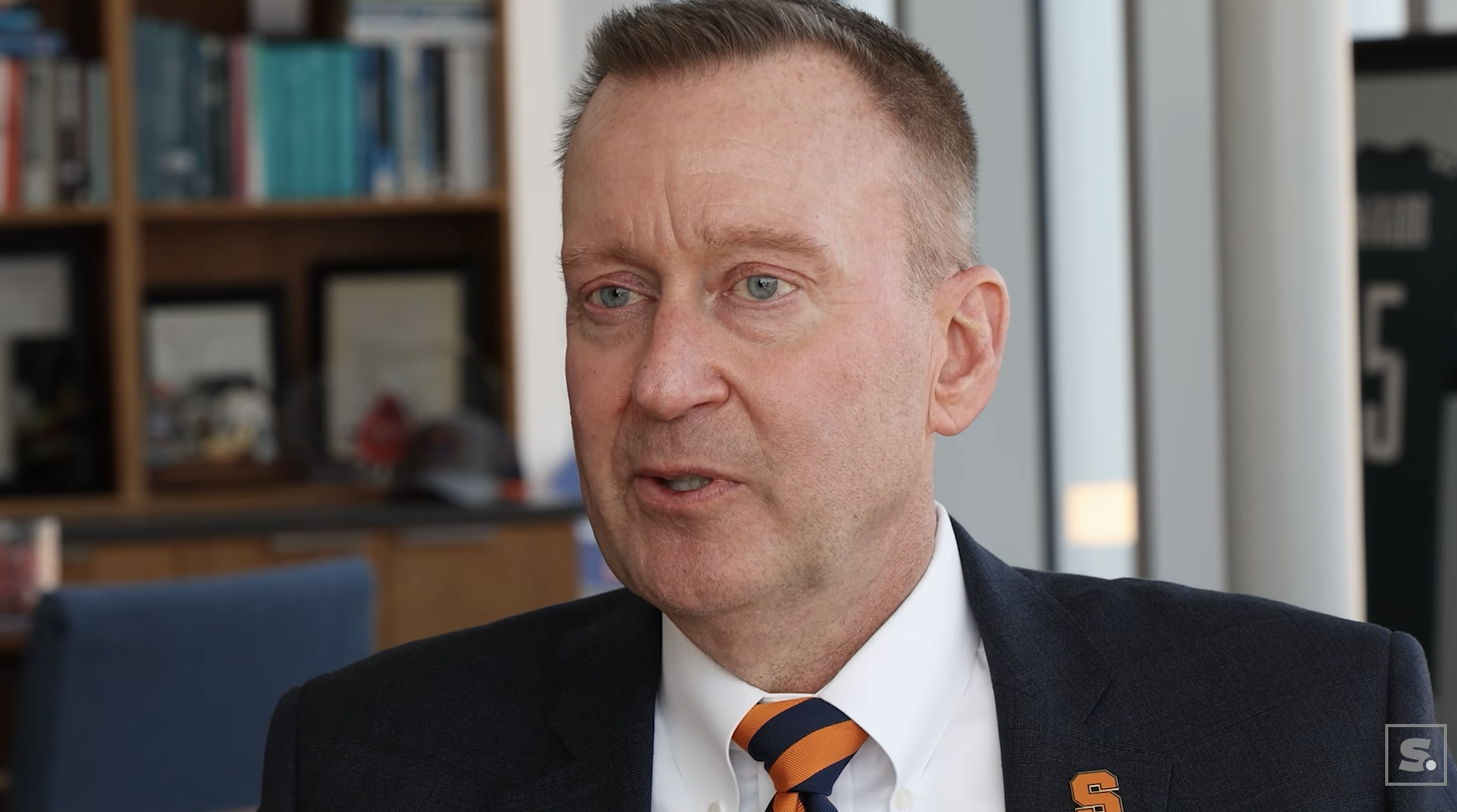
Speaking to Syracuse.com, J. Michael Haynie made a remarkably blunt point about the role of sports at Syracuse University.
He described bringing Jim Boeheim into a class of about 200 students and asking a simple question: how many chose Syracuse, at least in part, because of its nationally relevant athletics programs?
“Easily 90 percent of the hands in the room went up,” Haynie said.
Then he drew the obvious conclusion.
“We are a university where our economic model is largely driven by student tuition, room and board. And if one of the reasons students are enthusiastic about Syracuse University is being at a university with top tier athletics… that means we need to be a university with top tier athletics.”
That’s not subtle.
That’s a chancellor explicitly tying the school’s business model to the success of its athletic programs.
For fans who have felt the university lacked urgency in the NIL era, that statement lands differently.
For decades, Syracuse athletics helped drive the brand nationally. The Dome crowds, the Final Four runs, the football glory years — those weren’t just sports moments. They were marketing. Recruitment. Institutional identity.
But the modern landscape is brutal. Schools that hesitate on NIL infrastructure, coaching salary pools and football investment quickly fall behind.
And many Syracuse fans felt that’s exactly what happened.
Wildhack, a longtime ESPN executive and passionate Orange supporter, was often seen as someone who loved the programs but struggled navigating the rapidly evolving economics of college sports.
Haynie’s framing suggests the university may be thinking about athletics more strategically moving forward.
Not as an accessory to the university’s mission.
But as a pillar of it.
That shift matters because Syracuse is about to make two of the most important hires in decades: a new athletic director and potentially a new men’s basketball coach.
If the new chancellor truly believes top-tier athletics drive enrollment, brand visibility and student enthusiasm, those hires will likely reflect that urgency.
Fans have been waiting to hear someone at the very top say this out loud.
Now they have.
The next question is whether the commitment behind those words follows.