
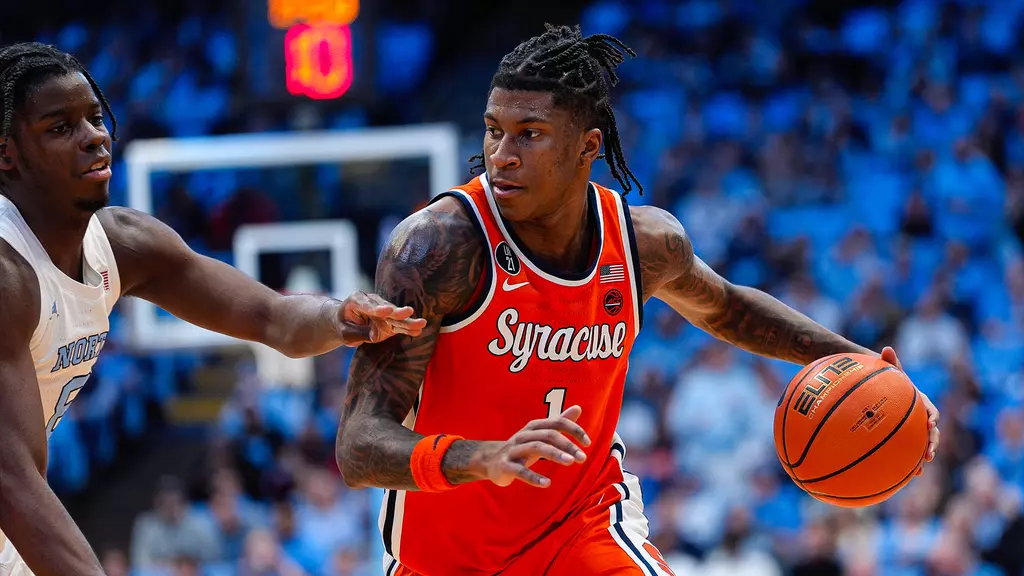
College basketball never stands still. The transfer portal churns, NIL deals reshape locker rooms, and recruiting shifts the balance of power each season. For Syracuse, this is a pivotal moment. The program still carries tradition, a passionate fan base, and a respected brand, but on-court results remain uneven. In the hypercompetitive ACC, identity and stability separate contenders from pretenders.
As the season nears its end, Syracuse sits in a middle ground, historically respected, yet still chasing consistency. To gauge where the Orange stand, we must examine recruiting, talent gaps, bubble battles, and the financial muscle driving expectations.
The Recruiting Race: Pitt Surges Ahead
In today’s college basketball ecosystem, recruiting momentum shapes a program’s trajectory. Teams that balance high school talent with smart portal additions build sustainable pipelines. Right now, rival Pittsburgh is gaining steam. While Syracuse searches for its next recruits, the Panthers are assembling one of the ACC’s top-ranked classes and generating real buzz around their future core.
That recruiting momentum doesn’t just show up in headlines. It influences transfer chatter, offseason expectations, and even College Basketball lines as projections begin to reflect perceived depth and stability. Pittsburgh’s haul signals structure and belief. Syracuse, by contrast, has leaned heavily on the portal to fill immediate needs, a strategy that rarely creates long-term continuity.
The Detroit Pistons analogy fits here. Pittsburgh resembles a young NBA team with a defined rebuild and promising prospects. Syracuse feels closer to shaky Pistons teams, talented in spots but lacking foundational stability. Until the Orange restore their high school pipeline, sustained success will remain difficult to secure.
The Talent Gap: Chasing North Carolina
When Syracuse measures itself against the ACC’s gold standard, Duke and North Carolina set the benchmark. The Blue Devils and Tar Heels consistently reload with high-level recruits and sit near the top of the conference in profitability per athlete. That blend of financial strength and talent acquisition creates separation.
The matchups last month underscores the divide. Syracuse competed hard but ultimately fell 87-77, unable to contain Carolina’s depth across 40 minutes. The Tar Heels rotated waves of skilled scorers and defenders, while the Orange struggled to maintain efficiency late in the game.
The Orange show flashes of competitiveness, but until roster construction matches Carolina’s firepower, they operate one tier below the ACC’s elite programs.
The Bubble Battle: Treading Water with Wake Forest
The ACC’s middle Class defines Syracuse’s current address. It’s crowded, competitive, and unforgiving. Teams like Wake Forest occupy the same territory, dangerous enough to threaten anyone, but inconsistent enough to hover near the NCAA Tournament bubble.
Coach Adrian Autry describes the issue plainly: failing to “make the plays we needed to make.” That inability to close tight games keeps Syracuse stuck around .500. Analysts peg their postseason chances at just five per cent, meaning road wins against Quad 1 opponents like Wake Forest become essential.
Syracuse battles Wake and Virginia for relevance rather than dominance. The Orange aren’t rebuilding from the ground up, but they’re not firmly established contenders either. They compete in a conference that leaves little room for complacency, often battling for key moments rather than consistently controlling them.
The Cautionary Tale: Avoiding Miami’s Fate
NCAAB narratives, often contextualized through resources like FanDuel Research, highlight how quickly momentum can shift within the ACC. While some programs surge forward, others become cautionary examples. Miami fits that description. The Hurricanes average nearly 85 points per game, showcasing one of the conference’s flashiest offenses. On paper, they look explosive and dangerous.
Yet scoring volume doesn’t guarantee consistent wins. Defensive lapses and late-game breakdowns undercut Miami’s statistical shine. When Syracuse faced the Hurricanes in January, the Orange secured a victory by executing with discipline and composure, exposing the gap between flashy numbers and functional basketball.
In NBA terms, it’s like defeating a high-scoring team that piles up empty stats without structure. Syracuse avoids becoming fundamentally broken, even if inconsistency lingers. Miami demonstrates how quickly style can outpace substance. The Orange may still be refining their identity, but they maintain enough balance to avoid becoming a hollow contender.
The Financial Giant: A Blue Blood Budget with Mid-Tier Results
Perhaps the most perplexing aspect of the Syracuse Orange in today’s college basketball landscape is the gap between resources and results. Recent data shows Syracuse generates significant profit per basketball student-athlete.
In most cases, financial backing fuels momentum. Programs with that kind of strength usually remain near the top of the standings and reload without losing ground. By pure economics, Syracuse should consistently compete with the ACC’s heavyweights and position itself for deep March runs rather than postseason uncertainty.
Instead, the Orange hover in the conference middle tier, battling for just to make the tourney instead of national relevance. This disconnect defines the program’s current paradox. Until on-court execution matches financial capability, Syracuse remains a wayward program, equipped like a contender but performing like a program still searching for its breakthrough.
The Path Back to National Relevance
The Syracuse Orange stand at a crossroads defined by opportunity and urgency. The brand carries weight, the finances provide leverage, and the fan base demands relevance. Yet college basketball evolves too quickly for nostalgia to guarantee success. Recruiting must regain momentum, player development must sharpen, and roster construction must prioritize continuity over short-term fixes.
The ACC offers no shortcuts. Programs like North Carolina set the bar, Pittsburgh builds upward, and middle-tier rivals fight for survival. Syracuse has the tools to climb, but tools require direction. If the Orange align financial strength with recruiting stability and consistent execution, they can shift from bubble tension to national conversation. The landscape remains fluid, and Syracuse’s next moves determine whether it rises or stays stuck in competitive limbo.
Content reflects information available as of 2026/02/25; subject to change.