
Just when Syracuse’s athletic director search couldn’t get more layered, it did.
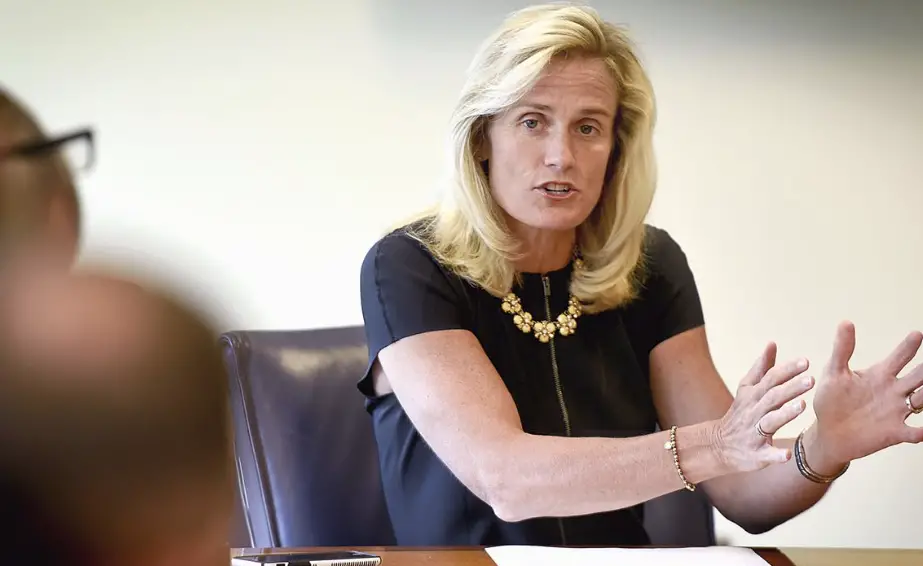
As The Daily Orange reports, a December 2025 human resources complaint alleged that Heather Lyke — currently serving as special adviser to the chancellor and director of athletics — directed employees to disregard instructions from outgoing AD John Wildhack and overstepped “the appropriate boundaries of her role.”
The complaint reportedly described a “culture of intimidation,” citing harassment, bullying and abuse of authority. According to the documents obtained by The Daily Orange, HR ultimately found no violation of university policy but acknowledged “some lack of clarity” surrounding Lyke’s role and authority.
The university said it handled the matter with “full objectivity and integrity.”
So here’s the question that now hovers over the search:
Will this prevent Lyke from getting the job?
Let’s separate fact from fallout.
There was no formal finding of wrongdoing. No policy violation. No disciplinary action. That matters. In many corporate or university environments, that would close the book.
But athletic director searches aren’t normal HR exercises.
They’re political. They’re donor-sensitive. They’re perception-driven.
And perception is where this becomes complicated.
Lyke is already a polarizing name among some Syracuse fans due to criticism of her tenure at Pitt — particularly surrounding NIL posture and financial prioritization in the revenue-sport era. Syracuse legend Rob Konrad recently shared a critical column of her tenure at Pitt. Now layer on a reported internal complaint alleging intimidation and authority confusion during a transition year where both the chancellor and AD are exiting.
Even if HR cleared the matter, the optics are messy.
There are a few possible outcomes:
- It changes nothing. Decision-makers may view the complaint as a transitional friction issue and trust HR’s conclusion.
- It becomes a tiebreaker. In a tight field, leadership may opt for a candidate without public controversy attached.
- It amplifies donor hesitation. If influential boosters were already uneasy, this report gives them something tangible to point to.
This search was already under a microscope because of NIL competitiveness, resource allocation philosophy and the need to stabilize the program in both football and basketball.
Now it carries another layer: internal leadership style.
Hiring an AD is about vision. But it’s also about tone. Culture. Trust.
Even if the complaint does not disqualify Lyke on paper, it introduces risk — and in high-level administrative hires, risk tolerance is often low.
Syracuse needs unity in this moment. The next AD must enter with credibility across staff, coaches, donors and fans.
The report may not eliminate Lyke.
But it undeniably complicates her candidacy.
And in a search this important, complication matters.