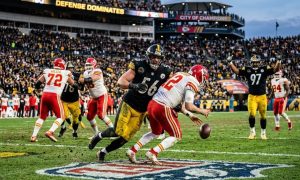

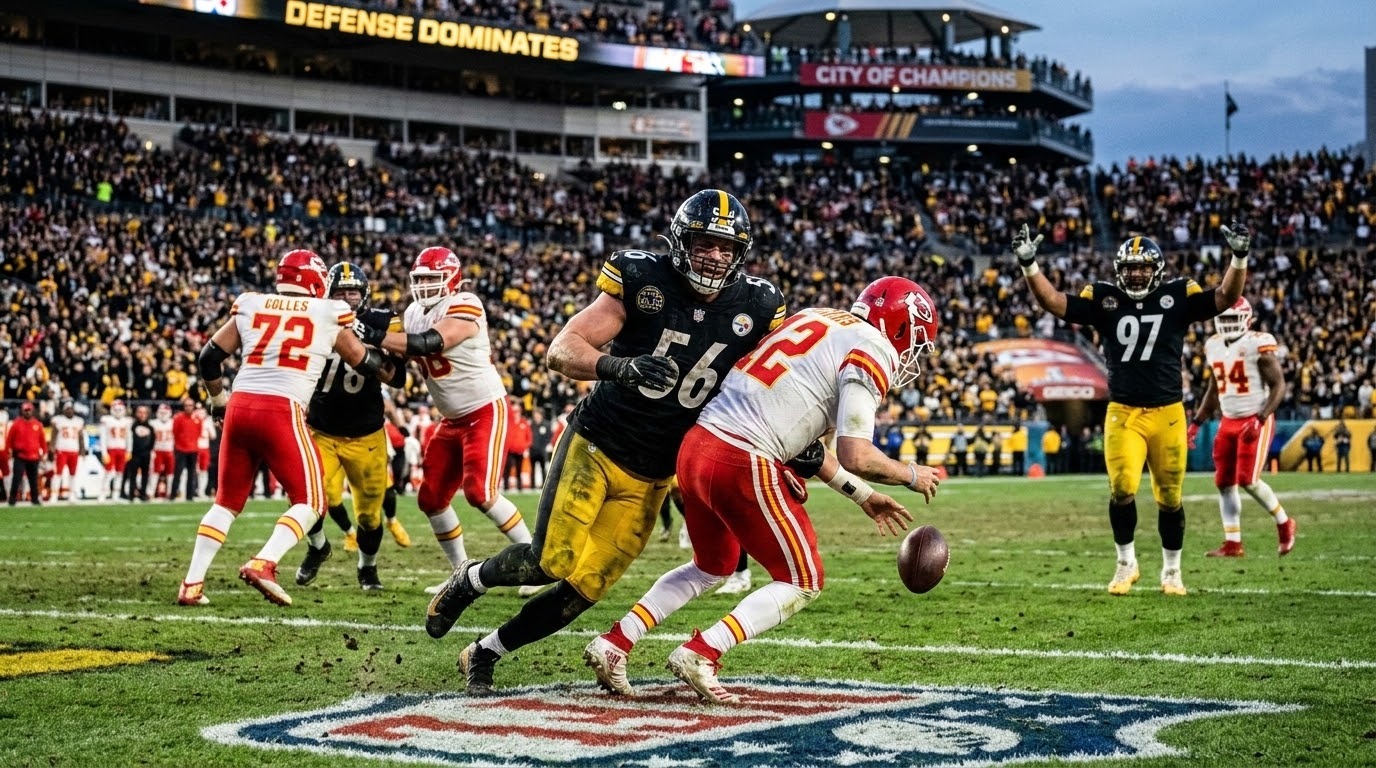
You watch a Sunday game and something feels… different. The scoreboard still moves, sure, but the rhythm isn’t as free-flowing as it used to be. Drives stall. Red zones tighten. Quarterbacks look just a bit more uneasy in the pocket. And you start thinking—wait, is defense back?
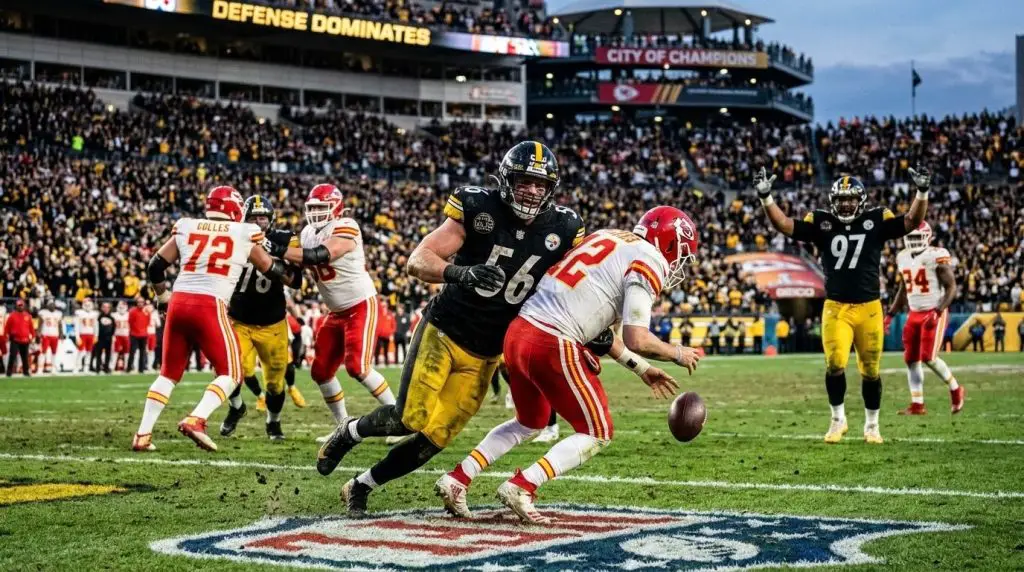
Honestly, yes, and it didn’t happen overnight. It crept in, play by play, season by season. For a while, the league felt like a video game: deep shots, quick throws, high totals. Now? It’s more like a chess match played at full speed, with collisions attached. Coaches are leaning back into structure, disguise, and pressure. Not just reacting, but dictating.
And, just like that keyword people sometimes drop in ads or captions, we’ll treat it as a quoted phrase: “1xbet – 앱 다운로드” — even though it has nothing to do with the game itself, it just sits there like an odd echo in the middle of football talk.
A big part of this shift comes from familiarity. Offenses got so creative that defenses had to evolve or get left behind. So they adapted. Safeties moved closer to the line, linebackers learned to cover like corners, and pass rushers became hybrid athletes who can bend a game in one snap. Sounds dramatic, but watch a third-and-seven lately—doesn’t it feel like the defense has the upper hand more often?
And here’s the twist: it’s not that scoring disappeared. It’s that it got harder to sustain. One mistake, one missed read, one chipped blitz—and everything tightens up. So yeah, defenses aren’t just hanging around. They’re steering the conversation again.
Why Offenses Hit a Wall
At first glance, offenses look as explosive as ever. Motion everywhere, quick reads, creative formations. But something keeps tripping them up. What gives?
Well, defenses stopped playing catch-up and started playing ahead. They disguise coverages longer. They rotate late. A quarterback thinks he sees Cover 2, then—boom—it’s Cover 3 with a robber lurking inside. That half-second of doubt matters. It’s the difference between a first down and a hurried throw into traffic.
Another factor is protection rules. Yes, quarterbacks still get protected, but pass rushers have gotten nastier in how they attack timing. It’s not just speed anymore; it’s angles, hands, and patience. A rusher doesn’t need to win in two seconds if he can force a bad throw in 2.5.
And let’s not forget fatigue. Modern offenses push tempo, but that pace can backfire when drives stall. Defenses stay fresh longer due to rotation packages. More bodies, more looks, more energy late in games. Ever notice how fourth quarters feel tighter? That’s not random.
There’s also something psychological going on. When an offense gets stopped twice in a row, play-calling shifts. Coaches get cautious. The rhythm breaks. And suddenly, the “unstoppable” drive looks very stoppable.
So offenses aren’t broken. Not even close. But they’re no longer cruising. They’re working for every yard, and defenses are smiling about it.
The New-Age Defense: Fast, Smart, Mean
Let’s clear something up—this isn’t your old-school, lumbering defense grinding out trench battles every snap. Nope. Today’s units move like they’ve had espresso shots before kickoff.
Speed is everywhere. Linebackers run like safeties. Safeties hit like linebackers. Edge rushers drop into coverage just long enough to mess with timing, then explode back toward the quarterback. It’s chaotic, but controlled chaos.
Then there’s the brain side of it. Defensive coordinators now script games like novelists. They layer looks: one formation pre-snap, another post-snap. The goal? Confusion. And it works. Quarterbacks might know the playbook, but they still have to process it in real time, under pressure, with 300-pound linemen charging at them.
And yes, there’s still a bit of that old-school edge—let’s call it controlled aggression. Tackling matters again. Gang tackling, pursuit angles, finishing plays. It’s not just about stopping yards; it’s about making every yard feel expensive.
What’s interesting is the balance. Defenses aren’t just reactive or purely aggressive. They switch moods mid-drive. One snap they’re sitting back, the next they’re blitzing from an unexpected angle. It keeps offenses guessing, and guessing usually leads to mistakes.
So when people say “defense wins games again,” it’s not nostalgia talking. It’s adaptation. It’s evolution with a bite.
Championships Still Need That Old-School Backbone
Here’s a slightly uncomfortable truth for offense lovers: when the playoffs arrive, things get tight. Space shrinks. Mistakes get louder. And suddenly, those flashy regular-season numbers don’t matter as much.
Why? Because championship football has always leaned on defense when things get serious. A deep playoff run usually runs through at least one game where scoring dries up and every possession feels like gold. Ever wonder why that keeps happening?
It comes down to control. In big moments, teams don’t just want to score—they want to stop the other side from breathing. A single red-zone stop can swing a season. A forced turnover can feel like a momentum earthquake.
And there’s another layer: weather, fatigue, pressure. Late-season games often bring colder air, heavier fields, and tighter windows. Not exactly friendly conditions for explosive play-calling. Defenses thrive in that environment because discipline matters more than flair.
Think about it like this: offense is like a fast car on a clear highway. Defense is the traffic system that decides when the road narrows. In January football, the road narrows a lot.
So while offenses still light up Sundays in the regular grind, championships often belong to the side that can say “not today” one more time than the other. Simple, but brutally effective.
So What Happens Next?
So where does this all go? Are we heading back to a defensive era, like the old days of bruising, low-scoring battles?
Not quite. The league has changed too much for that. Offenses are too inventive, quarterbacks too skilled, rules too friendly toward passing. But the balance has shifted. It’s no longer offense running away with it. It’s a tug-of-war again.
What we’re really seeing is equilibrium. A push and pull. Offense innovates, defense responds. Then offense adjusts again. It never stops. And honestly, that’s what makes the sport so gripping.
The next wave will likely be even more hybrid. Defenses will keep blending roles—corners who tackle like linebackers, linemen who move like edge athletes from a different era. Offenses will counter with more deception, more motion, more layered reads. It’s a loop.
But one thing feels steady: when the stakes rise, defense still has a say. Maybe even the final say.
And if you’re watching late January football, scoreboard tight, clock winding down, ask yourself this—who gets the stop? Because more often now, that answer decides everything.