
Three years later, history has rendered its verdict.
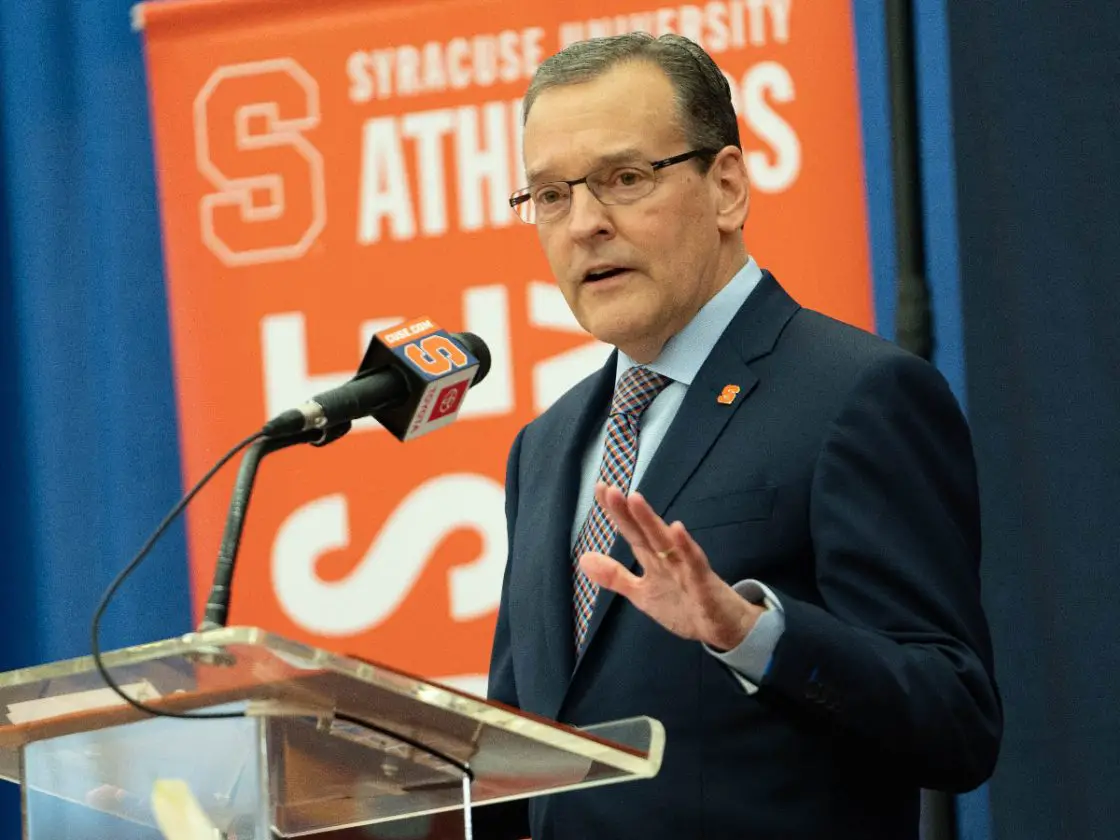
Former Syracuse athletic director John Wildhack (partially) pulled back the curtain on the biggest decision of his tenure: choosing Adrian Autry over Gerry McNamara to replace Jim Boeheim.
“It was a really hard decision to make,” Wildhack said in an interview on Cuse Sports Talk.
That sentence alone is revealing.
For years, Syracuse fans debated whether McNamara ever had a legitimate chance to become head coach after Boeheim’s retirement. Some believed Autry had always been the heir apparent.
Wildhack’s comments suggest otherwise.
“I knew I was going to disappoint one of them,” he said. “They both wanted the job. They both approached it the right way. They both said, ‘If I don’t get it, I hope the other one gets it.'”
In other words, Gerry McNamara wasn’t simply interviewing as a courtesy.
He was a legitimate candidate. Ultimately, Wildhack chose Autry. The rest is a frustrating chapter of Syracuse history.
And while he acknowledged “it didn’t work,” the full weight of that decision is impossible to ignore today.
Autry’s tenure lasted just three seasons.
Syracuse missed the NCAA Tournament each year, extending one of the proudest programs in college basketball to five consecutive missed tournaments. The Orange posted losing conference records, attendance sagged, donor frustration grew, and questions about Syracuse’s ability to compete in the NIL era became louder than ever.
Perhaps the most ironic part?
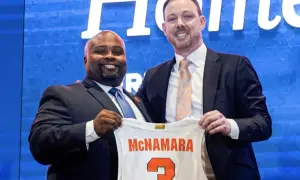
After three difficult years, Syracuse ultimately hired the very coach it passed over.
McNamara.
Wildhack chose poorly. There’s no guarantee that McNamara will soar in this position. We have to see how this plays out. But watching G-Mac guide Siena to the Big Dance, develop players, and attack the NIL landscape makes it seem like the choice to go to Autry was bad one.
The consequences stretched far beyond wins and losses.
Those three years coincided with college basketball’s most dramatic transformation. NIL exploded. The transfer portal reshaped roster building. Syracuse admitted it wasn’t prepared for the new era, and the program spent valuable time trying to catch up while other schools surged ahead.
Now compare that to the energy surrounding McNamara.
In just one offseason, he’s rebuilt relationships with alumni, made fundraising a priority, aggressively attacked the transfer portal, brought Syracuse back to Madison Square Garden, added games at Barclays Center and Mohegan Sun, and reignited a fan base that had grown increasingly apathetic.
No one can say with certainty that McNamara would have produced different results had he been hired in 2023.
The NIL challenges still would’ve existed.
The transfer portal still would’ve transformed the sport.
But Syracuse eventually arrived at the same destination anyway.
It just took three painful years to get there.
That’s what makes Wildhack’s interview so interesting.
It wasn’t merely a look back at a difficult decision.
It was a reminder that one choice altered the trajectory of Syracuse basketball during one of the most consequential periods in the sport’s history.