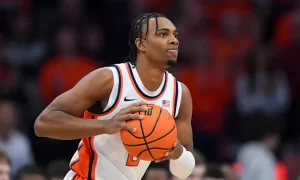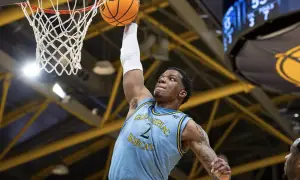

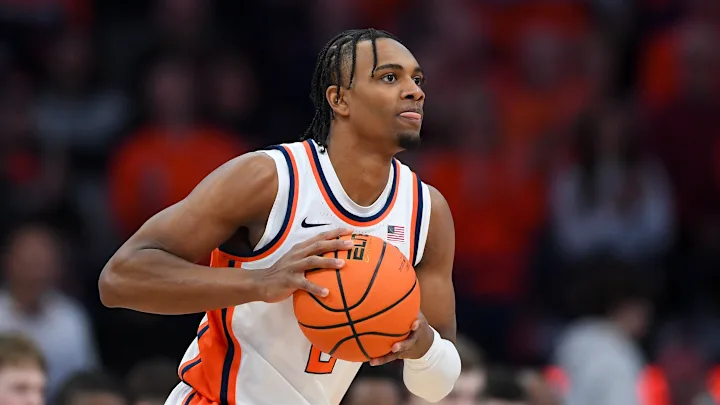
JJ Starling is trying to play college basketball again next season. The bigger question circulating right now isn’t whether he’ll find a landing spot. It’s whether the legal path getting him there actually holds up.
It never ends with the NCAA, as eligibility is a moving target every day. Starling, a Baldwinsville native who spent three seasons at Syracuse after transferring from Notre Dame, went undrafted this summer and appeared to be out of eligibility after a senior season that underwhelmed just about everyone who watched it. Then, this week, word broke that he’s heading to the transfer portal anyway, chasing a fifth year of competition that shouldn’t exist under the NCAA’s rules as written.
Here’s the mechanism, and it’s messier than the headlines suggest. CBS Sports’ Jon Rothstein reported Wednesday that Starling is among a group of players added to a fifth-year eligibility injunction covering the high school Class of 2022, the same broad legal wave that’s kept Amarri Monroe’s eligibility alive at Syracuse this month. The problem is that reporting on Starling’s specific case has been inconsistent about exactly which lawsuit covers him. Some outlets describe it as a California-based case; Rothstein’s own report also says California. The injunction driving the Monroe situation, Wisne v. NCAA, is a federal case out of Colorado. Whether Starling’s path runs through Wisne, a separate state-level suit, or some other class entirely isn’t clearly settled in the public reporting yet, and that ambiguity matters, because not every one of these lawsuits has actually survived NCAA appeals.
That uncertainty hasn’t gone unnoticed by the people who watch this program closest. On SyracuseFan.com, one thread dedicated to the news captured the skepticism directly: “I’m not mad, just wondering… But still wondering if it will hold up since that case seems to have gone further than most of the others.” It’s the exact question hovering over every one of these Class of 2022 eligibility cases right now, as the NCAA fights them individually in courtrooms across the country and has already won reversals in at least one circuit.
And then there’s the part of this story that has nothing to do with legal filings: Starling isn’t walking away from Syracuse with the fanbase clamoring to keep him.
It was a roller coaster for Starling. As a local kid, everyone wanted him to stay home. Then he committed to Notre Dame, and after an underwhelming season found his way back to CNY. His senior season was a genuine step back. After averaging 17.8 points as a junior, Starling’s production dropped to 10.9 points a game as Syracuse stumbled to a 15-17 finish. Jim Boeheim didn’t mince words about it publicly, pointing to Starling and Donnie Freeman having “horrible years” as a central reason Adrian Autry’s tenure struggled. As one SyracuseFan.com thread summed it up: “Great kid, elite athlete, mediocre basketball skills.”
So Starling exits Syracuse in an unusual spot. A former five-star, McDonald’s All-American with legitimate scoring ability on his best nights, chasing a fifth season through a legal process nobody can fully explain yet, leaving a fanbase that respects the person more than it misses the player. Whether he gets that fifth year at all may come down to which courtroom his name actually sits in, and right now, that’s genuinely unclear.