
College football fans spend every offseason discussing familiar contenders. Programs like Georgia, Ohio State, and Texas routinely command attention, yet every year, a few unexpected teams emerge as some of the sport’s biggest stories.
As the 2026-27 college football season draws closer, several programs appear positioned to become far more than dark horses in the race for conference and playoff relevance.
Coaching stability, transfer portal success, and expanded playoff opportunities have created a landscape where contenders can rise quickly. These five teams have the ingredients to become some of the season’s biggest stories.
Why More Teams Can Dream Bigger in the Playoff Era
The expanded College Football Playoff has changed how programs approach a season. A single loss no longer ends championship hopes, and teams outside the traditional power structure have a clearer path to the postseason.
Several changes have opened the door for emerging contenders:
- Expanded playoff access gives strong teams more room for error,
- The transfer portal allows coaches to address roster weaknesses in a single offseason,
- NIL opportunities help ambitious programs compete more effectively for talent,
- Conference realignment has created more unpredictable championship races,
- Faster roster turnover accelerates program turnarounds.
The transfer portal has accelerated program building across the country. Coaches no longer need years of roster development to see results, and a few key additions can quickly change a team’s trajectory within a single offseason.
Together, these changes have created a more open national landscape. Syracuse, Texas Tech, Auburn, Indiana, and Utah possess the coaching, talent, and momentum to capitalize.
1. Syracuse Orange
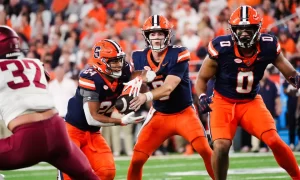
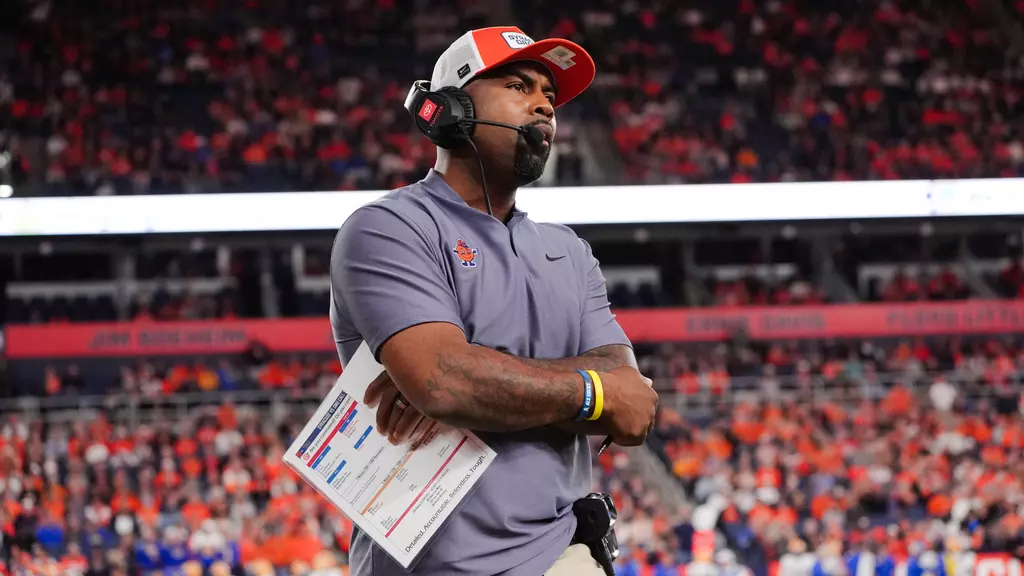
Few programs have changed their trajectory faster than Syracuse. Fran Brown’s vision of a more physical, nationally relevant program is already taking shape as recruiting, development, and expectations continue to rise across campus.
Quarterback depth may be Syracuse’s biggest strength. Former five-star Malachi Nelson and Notre Dame transfer Steve Angeli headline a talented group featuring incoming playmaker Matthew Outten, giving the offense the pieces to take a major step forward.
The schedule presents an opportunity as well. October home games against Louisville and SMU could shape Syracuse’s season, while an earlier home test against Cal gives the Orange another important opportunity. Protecting home turf at the JMA Wireless Dome would place Syracuse firmly in the ACC title conversation.
As preseason projections evolve, many fans are already tracking the NCAAF National Championship and how early odds shape the contender picture. A natty is too far out there, but Syracuse has the coaching, talent, and schedule to attract national attention sooner than many expected. Some prediction models make them one of the favorites to win the conference.
2. Texas Tech Red Raiders
Texas Tech enters the season with something every contender wants: momentum. But they have the one thing every contender fears: distractions. The Brendan Sorsby saga is sure to have many more twists and turns. Joey McGuire has built one of the Big 12’s most intriguing programs, giving the Red Raiders a level of stability many conference rivals still lack.
The offense is a major reason for the growing optimism. While the quarterback situation remains unsettled, Texas Tech is surrounded by playmakers, including former five-star receiver Micah Hudson and experienced transfers Kenny Johnson and Donte Lee Jr.
The conference landscape may be just as important. The Big 12 remains one of the most unpredictable leagues in the country, with several teams capable of competing for a title but no clear frontrunner separating itself from the field entering 2026.
A combination of offensive firepower, roster depth, and conference opportunity gives Texas Tech a realistic path to becoming one of the season’s biggest risers and a legitimate playoff contender by year’s end in an increasingly competitive landscape.
3. Auburn Tigers
National attention often gravitates toward Alabama, Georgia, and Texas whenever SEC discussions begin. That dynamic may create the perfect opportunity for Auburn to operate just outside the spotlight while building momentum.
Auburn has spent the past few years reshaping its roster through recruiting and transfer portal additions. The Tigers appear better equipped for the week-to-week demands of SEC play, with improved depth giving them a stronger foundation than in recent seasons.
Quarterback Byrum Brown could ultimately determine the team’s ceiling. His dual-threat ability fits the Tigers’ offensive system and provides the explosiveness Auburn has lacked at times in recent seasons, particularly against the SEC’s best.
Ongoing NCAAF team news and analysis has highlighted Auburn as a potential riser, particularly if quarterback play stabilizes. A few statement wins against SEC heavyweights could quickly thrust the Tigers into the national conversation.
4. Indiana Hoosiers
Curt Cignetti has built a reputation for winning wherever he goes, and Indiana’s national championship run validated that reputation on the sport’s biggest stage. The challenge now is proving the Hoosiers can sustain that success after reaching the summit.
Quarterback Josh Hoover, one of the conference’s top transfer additions, helps fuel optimism despite key departures. His decision-making and passing efficiency fit Indiana’s offense well, while wide receiver Nick Marsh adds another dangerous weapon.
The Hoosiers also benefit from a clear identity. Disciplined football, efficient offense, and strong situational execution have become trademarks of Cignetti’s teams, helping them remain competitive regardless of opponent from week to week.
The schedule will provide opportunities to defend Indiana’s place among college football’s elite. Matchups with Ohio State and Michigan could help shape the Big Ten race, while another strong season would reinforce the Hoosiers’ status as a national contender.
5. Utah Utes
Utah has spent years building one of the most respected cultures in college football. While the Utes rarely receive the same attention as the sport’s biggest brands, they consistently find ways to remain competitive year after year.
Morgan Scalley’s program knows exactly what it is. Physical line play, disciplined defense, and strong player development continue to serve as the foundation of Utah’s success, even as roster movement reshapes college football.
Quarterback Devon Dampier could raise the team’s ceiling in 2026. His dual-threat ability adds another dimension to the offense while complementing the balanced, physical style Utah prefers, giving defenses more to account for.
Utah’s experience and continuity remain important strengths. Veteran leadership and a well-established identity give the Utes valuable consistency, and the expanded playoff format could reward the physicality and defensive discipline that have long defined the program.
The Next Breakthrough Could Be Closer Than You Think
Every college football season introduces a few unexpected contenders. The expanded playoff era has only increased those possibilities, particularly for teams outside traditional powers.
Syracuse, Texas Tech, Auburn, Indiana, and Utah each enter 2026 with different strengths, but all have a realistic opportunity to exceed expectations. A conference title run or signature upset could quickly thrust any of them into the national spotlight.
One thing feels certain. By the time the season reaches November, at least one of these programs will have everyone talking, whether through a breakout run or signature upset.