
For the first time in years, Syracuse University is openly talking about a budget deficit.
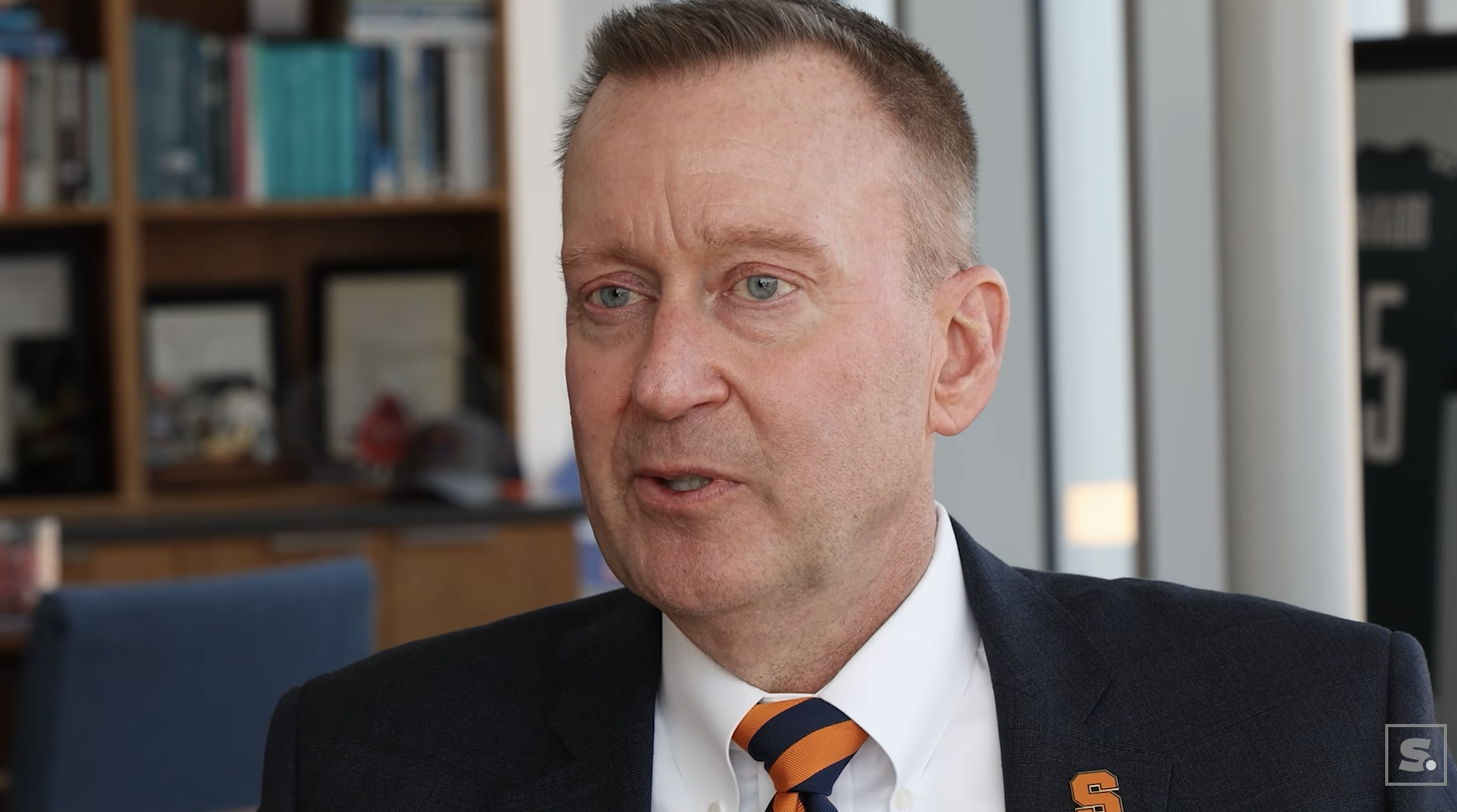
In a message to faculty and staff, Chancellor Mike Haynie acknowledged the university missed its undergraduate enrollment targets and now faces a financial shortfall.
“This is a moment for urgency and purpose — not panic,” Haynie wrote. “Universities that respond with focused, strategic effort will emerge stronger.”
The immediate reaction among Syracuse sports fans is obvious: does this affect athletics?
The answer is probably not in the way many people think.
Higher education is under enormous pressure to evolve as fewer families can keep up with the astronomical price tags, and more colleges close their doors every month. Students can get degrees online and save hundreds of thousands on room and board over the course of 4 years. Many are wondering what the true value of a degree is in a Gen Z economy.
Syracuse isn’t immune to these realities. But there is no indication Syracuse plans to reduce its commitment to major sports. In fact, the opposite argument may be more compelling.
At a time when enrollment is becoming more difficult, Syracuse football and basketball are among the university’s most visible marketing tools.
Every Saturday during football season, the university is showcased nationally. Every major basketball game puts Syracuse in front of recruits, donors, alumni and prospective students. In an increasingly competitive higher education landscape, visibility matters.
That’s why this week’s news should be viewed alongside several other financial developments surrounding the university.
Syracuse is currently involved in a dispute with the city regarding property taxes connected to the Schine Student Center. At the same time, the university and city officials are negotiating a new voluntary payment agreement that currently sends more than $2 million annually to Syracuse to help offset municipal services.
None of these issues individually threaten the university. Together, however, they paint a picture of an institution facing increasing financial pressure from multiple directions.
Now add athletics to the equation.
Recent ACC revenue figures showed Syracuse near the bottom of the conference in total athletic revenue. Orange fans have spent months debating NIL resources, roster budgets and whether Syracuse can keep pace with better-funded rivals.
That makes the recent hires of Bryan Blair and Gerry McNamara even more significant.
Blair was brought in with a reputation for fundraising and NIL innovation. McNamara’s roster construction already appears focused on finding value and identifying market inefficiencies rather than simply winning bidding wars.
In other words, Syracuse is entering an era where every dollar matters more than ever.
The real question isn’t whether Syracuse can afford sports.
It’s whether Syracuse can afford for football and basketball to stop being engines that drive excitement, donations, applications and national relevance.
Because if enrollment becomes one of the university’s biggest challenges, winning may become one of its most important solutions.